





Latest Issue
 
Windtech International November December 2025 issue
 

Login

 Follow us at BlueSkyFollow us at BlueSky


follow


Ultrasonic Wind Sensors Versus Mechanical Anemometers
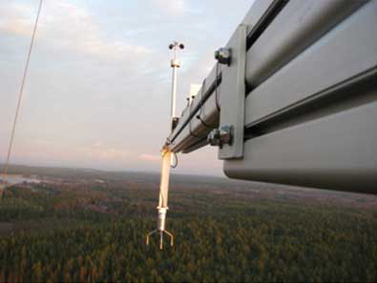
vaisalaMaking accurate wind measurements in difficult site conditions can be challenging, but the development of the wind energy industry has meant that high quality wind data has become an economic necessity. Multi-million investment decisions are being based on bankable datasets. Over the years mechanical anemometers have become the industry standard for wind speed measurement despite their non-ideal performance in difficult conditions. But with a better understanding of ultrasonic wind sensor functionality, its trade-offs and advantages, perhaps there is now a better way to get these important measurements.

By Nic Wilson and Juha Paldanius, Vaisala, Germany

{access view=!registered}Only logged in users can view the full text of the article.{/access}{access view=registered}Vaisala has participated in MEASNET wind tunnel tests to characterise performance against traditional mechanical anemometers and older generation ultrasonic wind sensors, and the results are quite appealing. In addition, experiences from Vaisala deployed meteorological towers in Europe with heated mechanical and ultrasonic wind sensors showed excellent results. Despite the demanding conditions, data availability and quality were maximised.

Where We Are Today
Even though ultrasonic wind sensors have been on the market for more than 20 years, their use in the wind energy industry is still limited. The IEC 61400-12-1 standard defines the meteorological measurement process for wind turbine and power curve testing, which does not recognise the use of ultrasonic sensors. This affects the guidelines for wind resource assessment, and thus ultrasonic sensors are not used extensively for this purpose. The standard and experiences from older generations of ultrasonic wind sensors has led the industry to turn its focus away from ultrasonic technology for wind measurements in resource assessment and wind turbine power curve testing.

The main concern about ultrasonic wind sensor performance has been the azimuth response of the sensor to wind. Studies have shown unacceptable variability in the wind speed measurement performance per given wind direction. State-of-the-art digital ultrasonic technology provides significant improvements to the past results and lifts the performance of the ultrasonic sensor above its mechanical counterparts.

Proving Ultrasonic Technology
Extensive wind tunnel tests and data from deployed meteorological wind towers prove that data provided by ultrasonic sensors is not only more consistent but also of higher quality. MEASNET calibrated wind tunnel tests show that issues with poor azimuth response are no longer valid with modern designs. Overall measurement accuracy of the Vaisala WINDCAP® Ultrasonic Wind Sensor WMT700 in in-line or angled flow is superior to mechanical anemometers. Measurement data from the wind towers confirm the results recorded in the wind tunnel. Not only is the better measurement performance of the ultrasonic sensor producing high quality data for analysis, but the data availability improvements, particularly in cold climates, reduces the uncertainty of the dataset.

Azimuth Rotation Tests
In the wind tunnel, azimuth rotation tests are done to examine the wind sensor’s sensitivity to wind flows from different directions. As ultrasonic sensors measure wind speed and direction from the same measurement volume, it is crucial that both measurements are stable across the 360-degree circle.

During the test, the anemometer is rotated around its vertical axis. The stepping rotation is 5 degrees. The starting point is either defined with respect to the north marker of the sensor, or with reference to the sensor cable if it is not inside the supporting tube. The tests are conducted at three wind speeds in the typical range exploited by wind turbines: 5, 10 and 15 metres/second. The ratio of the wind speed at the assessed azimuth angle and the reference position is calculated and plotted over direction (DEWI GmbH, Germany (2010)). Figures 1 and 2 show the comparison between ultrasonic sensors and mechanical sensors in the same azimuth rotation test. As can be seen, the ultrasonic sensors were much more consistent than the mechanical sensors.

Tilt Angle Tests
Tilt angle response tests are also done to investigate the sensor immunity to angled flows or vertical vectors in the wind. An ideal sensor should only report the in-plane horizontal wind speed and not disrupt the flow to cause a disturbance in measurement. As shown in Figures 3 and 4, the ultrasonic wind sensors give excellent results. However, the mechanical anemometers have significant difficulties with angled flow conditions (DEWI GmbH, Germany (2010) and ACCUWIND Project (2007)).

Anemometers are exposed to the flow in the wind tunnel at three different wind speeds. The anemometer is mounted in a tilted position so that the centre of its measurement volume is kept at the fixed reference position. In these tests the angle of inflow has been modified in a range from -30 to +30 degrees in 2-degree increments. At each position, data has been collected for 30 seconds. The vertical position has been used as the scaling factor. For each tilt angle tested, the relationship between the tilted and the vertical position has been calculated (DEWI GmbH, Germany (2010)).

In-Field Tests
In-field data is valuable for verifying the wind tunnel tests and performance of ultrasonic sensors for the wind energy industry. Vaisala analysed its sensors’ performance from three wind towers installed in Scandinavia. The three measurement sites were different in their geography and local climate:
  • Site A (see Figure 5) was a coastal site on an island with very small changes in the elevation.
  • Site B was an inland site where the tower is located on top of a hill.
  • Site C was a forested inland site with small changes in elevation.
The meteorological towers were equipped with MEASNET calibrated mechanical wind sensors and ultrasonic sensors, and data was collected from 2010 to 2012. Two datasets were created and analysed – one collected during two summer months and a second collected during two winter months. The criteria for evaluating mechanical anemometer performance against ultrasonic were:
  • consistency of the measurement data, wind speed and standard deviation of wind speed;
  • data availability, technical delivery of data from logger to database and availability of uncontaminated data;
  • occurrence of icing and speed-up effects on mechanical anemometers, effect of different validation limits;
  • seasonal variability of the data.
In-Field Results
Based on the datasets from the field, the technical data availability from the systems was very close to 100%. Using both mechanical and ultrasonic sensors produced datasets with high data availability. The in-field tower data showed almost perfect data availability numbers, but the well-correlated data was halved when the two measurement datasets were tested against each other. Why was this the case? Some of the reasons why the datasets did not correlate can be easily recognised, like sensor icing. Others, such as sensor over-speed effects, are more difficult to recognise or to estimate their influence on the data quality. Even when the phenomena are recognised, their identification from the dataset alone is difficult without reference data. Having the ultrasonic sensor data was important because most of the phenomena were linked to the operating principles of mechanical anemometers, so having the extra dataset from the ultrasonic sensors made the final analysis fairly simple.

Better Wind Measurements
The wind tunnel tests show that state-of-the-art ultrasonic wind sensors can be used as a benchmark for wind measurements in challenging conditions. The field results show that using both mechanical and ultrasonic technologies provides high data availability as well as better quality in the final analysis. Ultimately, with ultrasonic sensors and their built-in diagnostics, the measurement data is validated every time it is collected and post-processing of data becomes obsolete.

Biography of the Authors
Nic Wilson is Vaisala’s Energy Regional Market Segment Manager for Europe, the Middle East and Africa. He holds an MS in Professional Meteorology from the University of Oklahoma and an MBA from the University of Arizona Eller College of Management. Wilson has worked from Vaisala’s Hamburg office since 2010.

Juha Paldanius is Vaisala’s Offering Manager for Energy Meteorology. He holds BSc. in Mechanical and Electronics engineering and MBA. Paldanius has worked in different positions Vaisala’s Helsinki, Finland office since 2001.{/access}
Use of cookies

Windtech International wants to make your visit to our website as pleasant as possible. That is why we place cookies on your computer that remember your preferences. With anonymous information about your site use you also help us to improve the website. Of course we will ask for your permission first. Click Accept to use all functions of the Windtech International website.